



The Science Behind EECP
Understand how Enhanced External Counter Pulsation helps your heart receive more blood — without surgery.
How Can Leg Cuffs Help Your Heart?
Helping Your Heart Receive More Blood—Without Surgery
EECP is a non-invasive treatment that works with your natural heartbeat to improve blood circulation to the heart muscle.
It does not open blocked arteries like angioplasty. Instead, it helps your body develop natural bypass blood vessels (collateral circulation) while reducing the workload on your heart.
Book EECP Assessment
How EECP Works
During every heartbeat, a carefully timed sequence improves oxygen delivery and reduces cardiac effort.


During every heartbeat
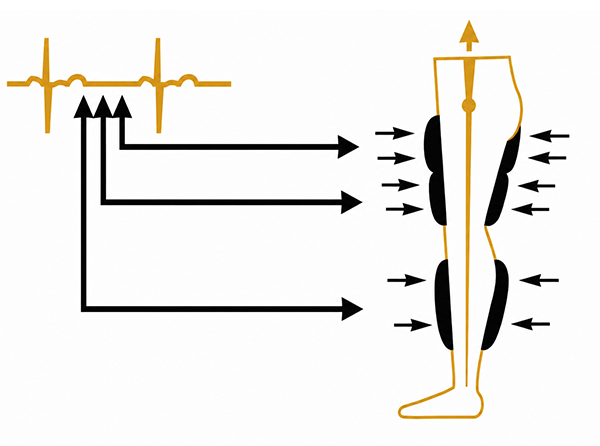
Cuffs inflate sequentially
When the heart relaxes, pressure moves blood upward — increasing oxygen supply to the heart muscle.
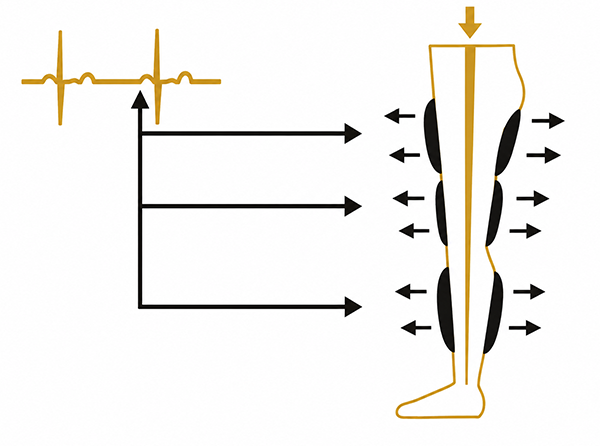
Cuffs deflate together
Just before the heart pumps, sudden deflation lowers resistance — so each beat takes less effort.
Step 1
When your heart relaxes, the cuffs inflate one after another from the calves upwards.
Step 2
This gently pushes blood back towards the heart, increasing oxygen supply.
Step 3
Just before the heart pumps, the cuffs quickly deflate.
Step 4
This reduces the resistance against which the heart has to pump, making each heartbeat easier.
What Happens Inside Your Body?

Improves Blood Flow
More oxygen reaches areas receiving reduced blood supply.

Supports Natural Bypass Vessels
Over time, the increased blood flow stimulates the development of small collateral blood vessels around narrowed arteries.

Reduces Workload on the Heart
The heart pumps against less resistance, reducing strain.

Improves Daily Activities
Many patients notice improvement in walking, climbing stairs and performing routine activities after completing treatment.
Improves Blood Flow
More oxygen reaches areas receiving reduced blood supply.
Supports Natural Bypass Vessels
Over time, the increased blood flow stimulates the development of small collateral blood vessels around narrowed arteries.
Reduces Workload on the Heart
The heart pumps against less resistance, reducing strain.
Improves Daily Activities
Many patients notice improvement in walking, climbing stairs and performing routine activities after completing treatment.
Why Do We Recommend EECP?
Daily Medical Therapy
- Relieves symptoms
- Daily tablets
- Controls disease
- Continues lifelong
Enhanced Therapy
- Helps improve circulation
- One-hour treatment sessions
- Supports natural collateral circulation
- Benefits may continue after treatment completion in appropriate patients
Disclaimer: EECP is not a replacement for medicines, angioplasty, or bypass surgery when these are medically indicated. It is used in selected patients after evaluation by a cardiologist.
Is There Scientific Evidence?
Supported by Clinical Research
Years of worldwide use
Peer-reviewed publications
Cleared technology
Decades of clinical practice
Wondering if EECP Can Help You?
Not everyone with heart disease needs EECP. Our cardiologist will evaluate:
- Your symptoms
- Angiography reports (if available)
- Current medications
- Previous angioplasty or bypass surgery
- Overall heart function